AI search optimisation for small business
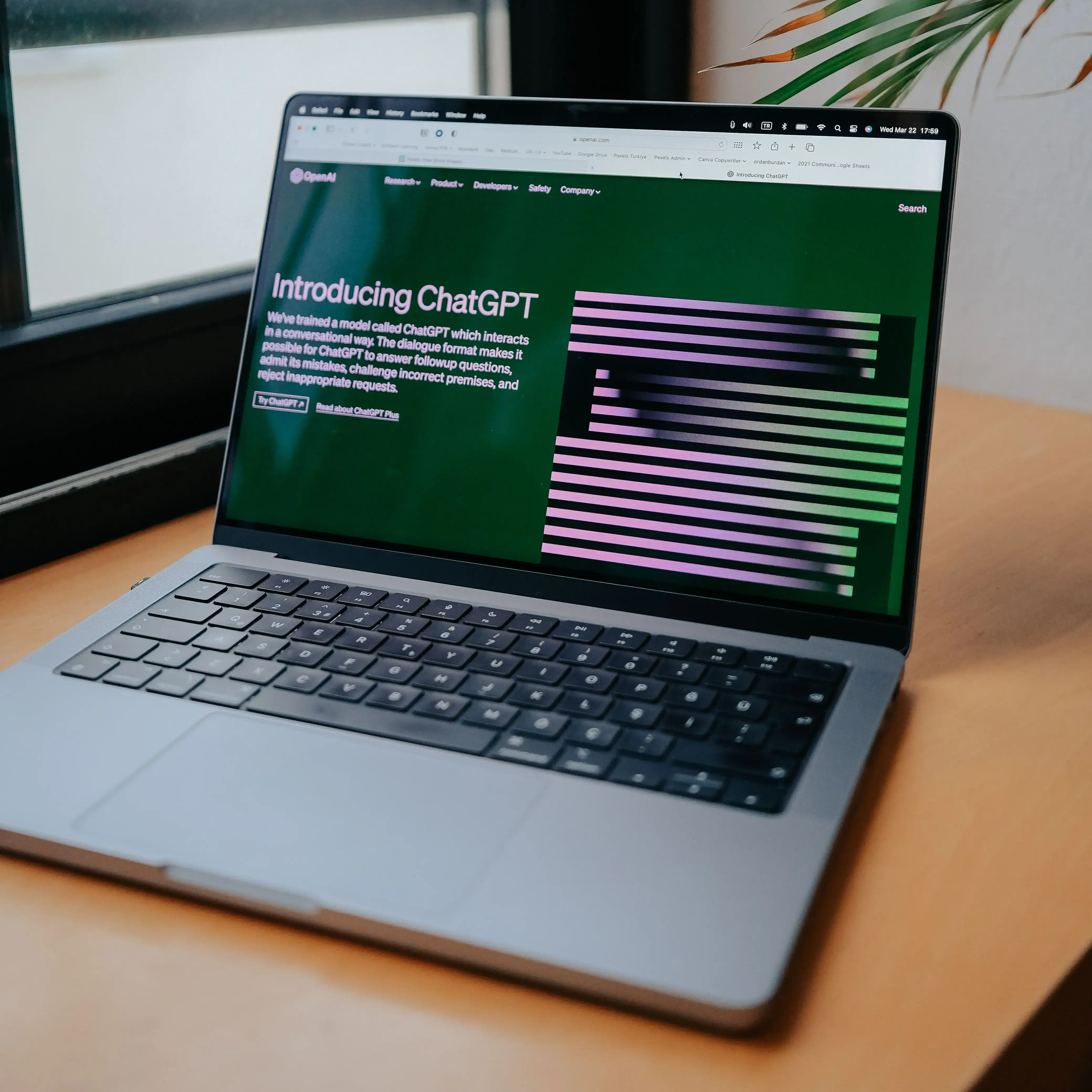
Here’s what’s happening to so many small business owners regularly. Somebody asks ChatGPT to recommend a plumber, an accountant, or a landscaper in their area. It answers with a name and why – and it isn’t you. That customer never opens Google, never sees the ten backlinks you spent two years earning, and never learns your business exists.
That’s the reality of today’s digital landscape. Around 50% of consumers use AI to research products and services, according to SemRush. That is why AI search optimisation for small business owners is no longer optional. Frankly, if you’re not getting AI optimised, you’re closing off half your market.
What AI search optimisation means
Search has split into three related disciplines – let me break down which each one is, and why you want it.
Traditional SEO gets you ranked in the classic results – think Google, Bing, DuckDuckGo, Yahoo. Answer Engine Optimisation (AEO) structures your content so it can be pulled directly into an AI snippet or an AI Overview. Generative Engine Optimisation (GEO) goes further again – earning enough trust from tools like ChatGPT, Perplexity, Claude, and Gemini, so that when someone asks who does this job locally, yours is the one that gets mentioned.
None of these are better than another – and for many, there’s alot of overlap. As Brendon Kraham, Google’s VP, Search & Commerce Global Ads Solutions said: “Good SEO is good GEO”.
Why this matters more than ever before
The shift in consumer behaviour has been faster than anyone really expected. BrightLocal’s Local Consumer Review Survey has tracked a steep rise in people using AI tools to find and vet local businesses, and it’s most prominent in the 30-44 age group – the target market many of the SMB owners working with me look to target – they’re looking for home improvement, landscaping, and healthcare and professional services.
Two takeaways: when an AI Overview appears, click-through to the top organic result drops sharply – but a business named inside the answer picks up a disproportionate share of those clicks that remain. And those visitors convert better than ordinary organic traffic, because the model has effectively done their shortlisting for them. They arrive with the idea in mind that you’re a reasonable option.
Gartner has forecast a decline in traditional search volume as informational queries get absorbed into AI answers. Even if you don’t believe it will be as dramatic as their number of 25% – for example, 77% of respondents use AI and traditional search together (SemRush) – it’s important to bear in mind the increasing use of AI over search.According to the same SemRush report as earlier, 69% expect AI to play a bigger role in how they shop in the future.
Why a small business can win here
This is the part I find most interesting, and I think you will too, since it really subverts the mechanism of traditional SEO that we’re all used to.
Consistency is now a ranking factor in its own right. Models are built to avoid being confidently wrong (called hallucinations/confabulation), so they cross-check your business across your website, your Google Business Profile, and directory listings. If your name, address, phone number or opening hours disagree, the safest move for the model is to not cite you. That’s not ranking you lower, mind you – that’s dropping you entirely from its answer.
Fact-density beats authority. Traditional SEO rewards years of accumulated backlinks, which is authority marker a new small business cannot buy or fake. AI citations rewards clear, structured, specific content: direct answers, easy to understand numbers, plainly stated facts. A well-run small business can produce those numbers easily using their specific insights, that only they can get by being in that industry. Can you imagine a large company easily understanding the market in your area? They can’t – only you know your client base and audience, and know what they struggle with and what impacts them the most.
That means the gap between you and a much bigger competitor is smaller in AI search than it ever was (or is, rather) in Google.
A five-minute test to check whether you have good AEO
Open ChatGPT or Claude and ask what your customer would be asking: “who’s a good [your trade] in [your town]?”
If you don’t appear, ask a follow-up: “does [your business name] do this?” If the model hedges its answer, gives a guess, gives multiple options, or describes you vaguely, that means your online presence currently isn’t consistent and/or structured enough for it to be able to cite you.
It’s important that when you run this test you do it while signed out, or using someone else’s account – AI memory means it may cite you because you’ve told it who you are – the key here is we’re giving it a blank slate, so it can act as closely as to how it would act when your potential customers chat to it.
What fixes bad AEO?
In practice, three things.
An FAQ with well fleshed-out genuine answers. Real questions – “which areas do you cover?”, “how much does XYZ cost?” – answered concisely in 40-60ish words, in plain English. Imagine you’re speaking directly to a customer. An AI model with often cite this word-for-word – so really do imagine you’re speaking to a customer, because you (in a way) are.
Schema markup, LocalBusiness and FAQPage in particular, so your website and pages are nice and easy for an AI to get its head around.
Matching details everywhere you appear. This is the boring one, yet possibly one of the most important. Check your online presence everywhere, and ensure everything matches up.
None of this replaces traditional SEO. It sits on top of it, the same way reviews sit on top of a website that already works. If the foundations aren’t there, none of this helps.
Lauren G described the way I tend to approach new ground like this:
“Eddie was diligent, flexible and a self-starter during our work together. It offered new ideas and asked clear questions when they arose.”
Which is what this area demands at the moment – it’s moving quickly, and to best help you I’ll need to understand your business and what you do well.
Frequently Asked Questions — AI Search Optimisation for Small Business
Is this a separate service from your SEO?
No, it’s folded into the same groundwork I do for every client, using the same tools. You’re not paying twice for something that ought to be part of a competent SEO strategy in 2026.
How long before I appear in AI answers?
It varies more than traditional SEO, because it depends heavily on how consistent your existing footprint already is. A business with strong foundations, and good schema can see strong movement in weeks. One starting from a rockier foundation, with scattered directory listings with inconsistent info has to fix that first, which takes longer.
Do I need a big content library?
No, and this is where small businesses have the advantage. Citation rewards clear, fact-dense answers over volume, which plays to your strengths far more than link-building.
My business is already well reviewed. Isn’t that enough?
It’s a strong start but it’s a different job. Reviews build trust once somebody has found you. AI search optimisation is about being surfaced as an option when a consumer is looking for you.
How does ChatGPT actually decide who to cite?
There’s a specific mechanism behind it, and I’ve written it up separately in how ChatGPT chooses its citations. Short version: it runs several searches, not one, and rewards sources that keep reappearing across them.
Does my Google Business Profile still matter for this?
Enormously – it’s one of the main things models cross-check against. My page on SEO for service businesses covers getting that right.
Ready to Get Found by AI, Not Just Google? Get in Touch with Key2
If your business is well run and well reviewed but nowhere to be found when someone asks an assistant for a recommendation, get in touch for a free, no-obligation discovery call. I’ll run the test with you and show you exactly where the gap is.